DroneOS
Open-source infrastructure for aerial robotics systems, built on ROS 2 and PX4.
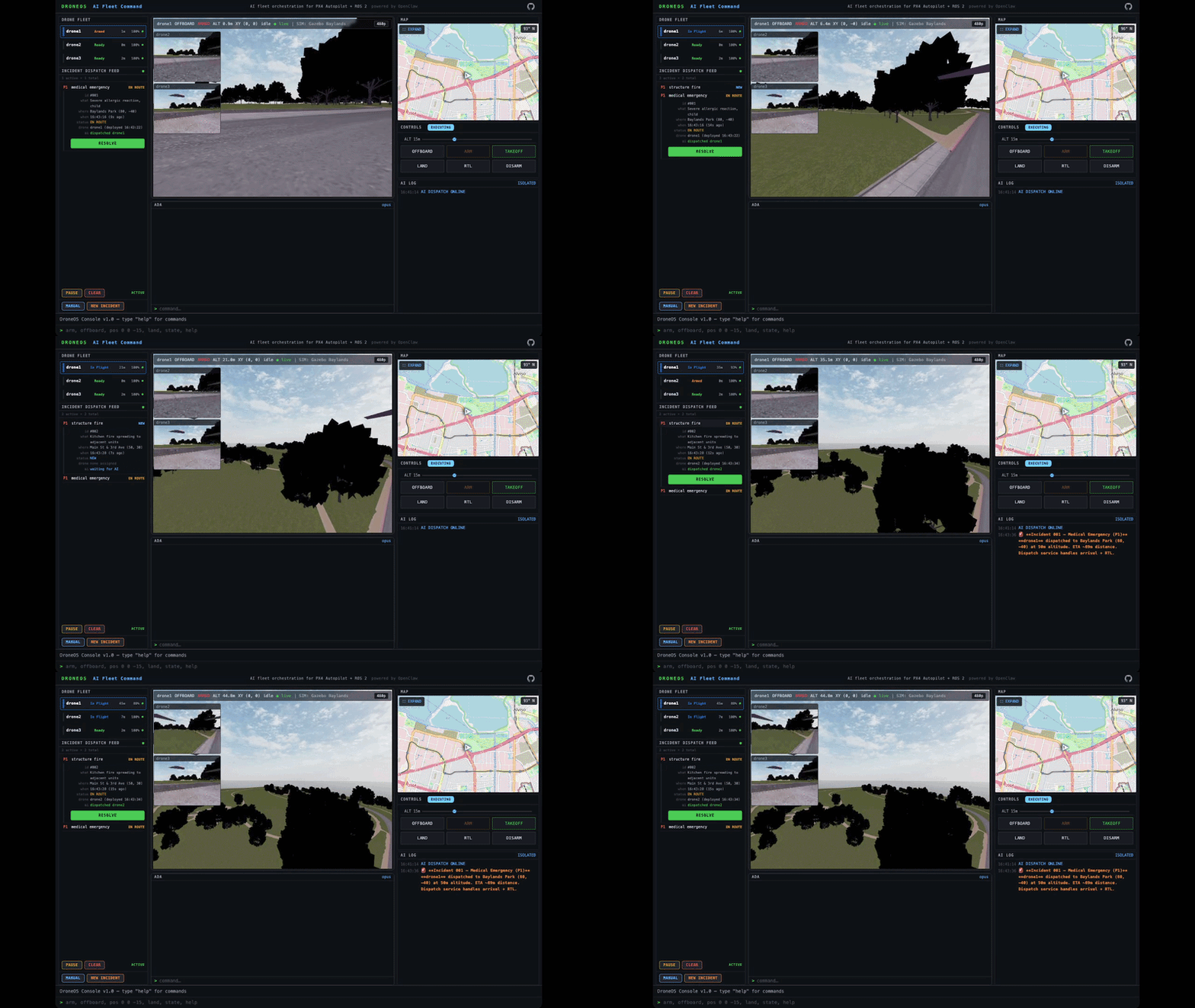
The DroneOS command center powering rapid aerial response workflow development.
DroneOS is the open-source software foundation behind Aeris Robotics systems. It provides the abstraction layer between raw flight controller topics and higher-level applications, from single-drone control to remote fleet operations and rapid response workflows like Aeris Sentinel.
Dispatch infrastructure
Built to support rapid aerial response workflows, including incident intake, fleet evaluation, and mission dispatch in simulation.
Cloud-to-drone control
Commands from anywhere over Tailscale VPN, with telemetry, camera feeds, and fleet status streamed to the ground station via WebSocket.
Simulation-in-the-loop
Full PX4 SITL environment with Gazebo so dispatch logic and coordination can be tested before moving to real hardware.
Core components
drone_core
C++ library and ROS 2 node providing high-level drone control APIs for arming, takeoff, landing, and position control.
drone_control.py
Python library and CLI for remote drone operations over WebSocket, usable anywhere that can reach rosbridge, including a cloud VPS over Tailscale.
Dispatch Layer
Mission orchestration for rapid aerial response workflows that receives incidents, evaluates fleet state, selects a drone, and executes dispatch logic in simulation.
Ground Station UI
React and TypeScript web interface with real-time telemetry, camera feeds, interactive map, and operator-facing fleet controls.
camera_ros
ROS 2 camera node using libcamera for Raspberry Pi camera modules, streaming video to the ground station via web_video_server.
Micro-XRCE-DDS-Agent
Bridge between the PX4 flight controller and the ROS 2 DDS network over serial or UDP.
Architecture
The system splits across two machines: a cloud VPS running dispatch services, the ground station UI, and remote access layers, plus a drone-side machine running PX4, the DDS bridge, and the drone SDK. Communication happens over Tailscale VPN with about 98ms round-trip latency.
Cloud layer
Dispatch service, bridge, ground station UI, and rosbridge relay. This is where orchestration, operator workflows, and remote access live.
Drone-side layer
PX4 SITL or real flight controller, Micro-XRCE-DDS Agent, drone_core SDK, rosbridge, and camera streaming.
Measured performance
Incident to dispatch is about 10 to 12 seconds, with decision time around 3 to 4 seconds and drone command execution around 2.5 seconds over VPN.
Get started
DroneOS runs on the companion computer, not the flight controller. The GitHub README includes setup instructions for SITL development and real drone deployment.